

Love is Love: Creating Conversations, Building Understanding, Strengthening Community & Celebrating Pride
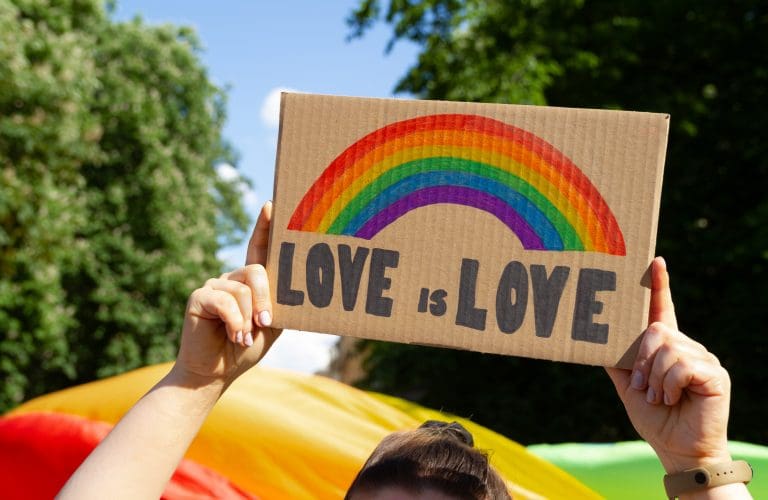
In this blog, we invite you to take a closer look inside one of the increasingly popular and impactful presentations taking place across Northbridge communities: Pride: Love is Love. Led by George Silvia, Senior Resident Engagement Director at Stonebridge at Burlington, the presentation encourages meaningful conversations about acceptance, understanding, and the power of human connection.
This article is built from George’s firsthand experiences presenting Pride: Love is Love to audiences across multiple generations, as well as the personal stories, reflections, and memorable moments that have been shared along the way. Through these experiences, George has witnessed how open dialogue can foster learning, empathy, and a deeper sense of community.
Throughout the month of June, Northbridge communities celebrate Pride Month and the LGBTQ+ community. We recognize that many of the residents, associates, families, and friends who are part of our communities have a connection to the LGBTQ+ community, whether through their own experiences or those of someone they love.
At Northbridge, we believe in creating communities where everyone feels respected, valued, and included, not only during Pride Month, but throughout the entire year.
This year, Senior Resident Engagement Director George Silvia has been taking his presentation, Pride: Love is Love, on the road, traveling across New England and visiting more than half of our communities. Along the way, he has been bringing the presentation to residents, associates, families, and friends, creating opportunities for meaningful conversations about acceptance, understanding, and belonging.
Designed to spark discussion, increase understanding, and encourage reflection, the presentation creates a space where attendees can learn from one another and share their own perspectives and experiences.
The presentation begins with a simple but important message: everyone is there to learn.
Each person enters the room with different lived experiences, perspectives, and backgrounds. Rather than viewing those differences as barriers, George encourages attendees to see them as opportunities for learning and connection.
“I frame these conversations as being about community, acceptance, and love rather than division or debate,” George shares.
After everyone has gathered, George begins by sharing his own personal experiences and why the presentation is meaningful to him. Starting with his own story helps create openness and trust among attendees.
George’s connection to the LGBTQ+ community comes from the people who helped shape him throughout his life.
“I was surrounded by people within that community who lovingly helped shape me into the person I am today,” George explains. “The importance of those individuals in my life had nothing to do with orientation or identity alone, but with the kindness, support, and acceptance they showed me as a person.”
Beginning with such a personal narrative helps attendees understand that conversations about Pride often touch more lives than we realize and that many of us have meaningful connections to the LGBTQ+ community, even if we do not immediately recognize them.
From there, George moves into the educational portion of the presentation, introducing terminology in an approachable and interactive way. To make concepts more relatable, he uses familiar public figures and cultural examples to illustrate that LGBTQ+ individuals have always existed throughout history and society.
George then explores the meaning of Pride and provides a brief overview of the movement’s history, emphasizing that diversity within humanity is not something new.
Throughout the presentation, he reinforces four guiding principles:
- We are all here to learn
- Accepting is not always the same as understanding
- This is about love
- Love is love
After years of presenting to audiences of different ages and backgrounds, George has learned that setting the tone early is one of the most important parts of the conversation. Creating a space that feels safe, respectful, and welcoming to questions allows people to engage more openly.
Many attendees, particularly older adults, worry about using the wrong terminology or asking the wrong question. George makes a point to reassure them that respectful curiosity is always welcome.
As long as a question comes from a genuine desire to learn and is asked with care, it can create an opportunity for growth and understanding.
Over the years, George has found that some of the most meaningful discussions begin with questions people have been hesitant to ask for years. Those conversations often lead to deeper understanding and stronger connections.
He also works to relate the topics being discussed to the experiences of his audience. While some residents may not personally identify with discrimination based on sexual orientation or gender identity, many can relate to feeling judged, dismissed, or misunderstood because of their age, gender, or another aspect of themselves they cannot change.
Drawing those parallels helps residents connect emotionally to the conversation and better understand the importance of dignity, respect, and acceptance for all people.
After each presentation, George hopes attendees leave with three key takeaways:
Relationships Are More Important Than Disagreements
Even when we do not fully understand someone’s identity or who they love, we can still choose acceptance, compassion, and love. The question we must ask ourselves is whether disagreement is worth sacrificing meaningful relationships.
LGBTQ+ People Are Whole, Complex Individuals
Sexual orientation and gender identity may be important parts of a person’s life, but they are never the only parts. Every individual deserves to be treated with dignity, respect, and compassion.
Curiosity Is the Beginning of Understanding
A lack of knowledge should never stop us from learning more. We all begin from different places, and when we create space for honest questions and open conversation, we give ourselves the opportunity to grow. Knowledge is powerful, especially when it leads to greater empathy.
As George has traveled throughout Northbridge communities this month, he has experienced a number of meaningful moments that demonstrate the impact these conversations can have.
Beyond the impact on residents, George has also witnessed how the presentation has strengthened relationships between associates and residents.
Several associates have shared that attending the presentation changed their perceptions of how residents might respond to conversations about the LGBTQ+ community. In particular, two associates who identify as members of the LGBTQ+ community confided that they had worried certain residents they cared deeply about might not fully accept them if they knew more about their personal lives.
During the presentations, those associates listened as residents asked thoughtful questions, shared supportive perspectives, and spoke openly about the importance of acceptance and understanding. What they heard surprised them.
“They came away feeling relieved,” George explains. “Residents they had worried about being judged by responded with compassion, curiosity, and kindness.”
For George, these moments highlight an often-overlooked benefit of creating spaces for open dialogue.
“As a senior living community, you can build a culture of inclusion among associates, and that’s incredibly important,” he says. “But the reality is that our caregivers and frontline staff often spend more time with residents than they do with their own families. It’s meaningful to know your company values you for who you are, but when you care deeply about the people you support every day, their acceptance matters too.”
By creating opportunities for residents and associates to learn more about one another, conversations like these help foster deeper relationships, stronger trust, and a greater sense of belonging throughout the community.
“When people feel accepted and connected, they become part of something bigger than themselves,” George says. “That closeness strengthens the community and, ultimately, helps us provide better care.”
Those connections have led to some of the most meaningful moments George has experienced throughout the series.
One resident shared that she had been a nurse during the height of the AIDS epidemic and remembered the stigma many gay men faced, even within healthcare settings. Her story led to a discussion about the Blood Sisters movement and the significant role the lesbian community played in supporting gay men during that difficult time.
The conversation ultimately evolved into a broader discussion about the importance of standing up for others, even when our own identities are not directly affected.
Other residents have shared stories about their children adopting children of different races and the challenges their families faced when some communities were not welcoming or accepting.
One resident reflected on her own experience and shared:
“Love really is love, and those two beautiful babies are my grandchildren, and I have and always will be their grandmother. Forget the differences, we are all the same.”
Another resident proudly shared that she is the mother of a lesbian daughter and grandmother to two adopted grandchildren. She expressed gratitude that Northbridge was helping spread the message that love transcends labels.
One of the most moving moments occurred during a presentation attended by residents, associates, and family members spanning multiple generations.
An associate shared his experience of growing up in a culture and family that did not support same-sex relationships. When he came out to his mother, he was not met with acceptance. He spoke openly about the importance of community support for individuals who may not find support within their own families.
He explained that finding a community where he could learn about himself and live openly changed his life. While his relationship with his mother remains a work in progress, he shared that they continue to communicate and that progress has been made.
As he finished speaking, residents seated on either side of him placed their hands on his shoulders and told him that they would be his community.
It was a moment that touched everyone in the room.
On more than one occasion, residents have approached George after presentations to share that they plan to reach out to LGBTQ+ family members or loved ones and ask how they can better support them.
For George, moments like these are reminders that meaningful conversations have the power to create lasting change.
Presentations like Pride: Love is Love are proof that regardless of age, cultural background, or life experience, we can all continue learning, growing, and deepening our understanding of one another.
As George reminds attendees at every presentation, the message is ultimately a simple one:
Love is love.